Can I work remotely from Bali for a UK company?
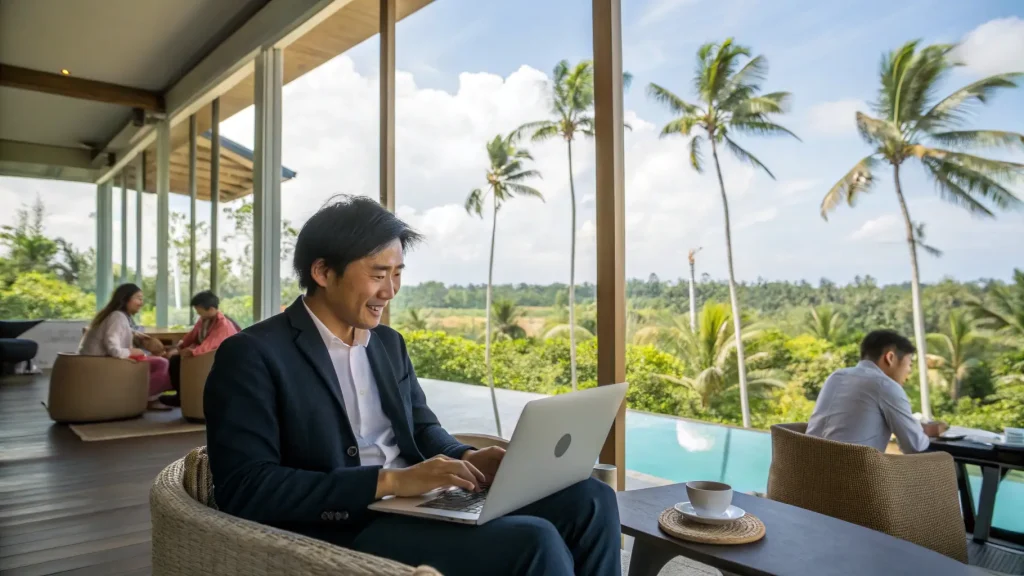
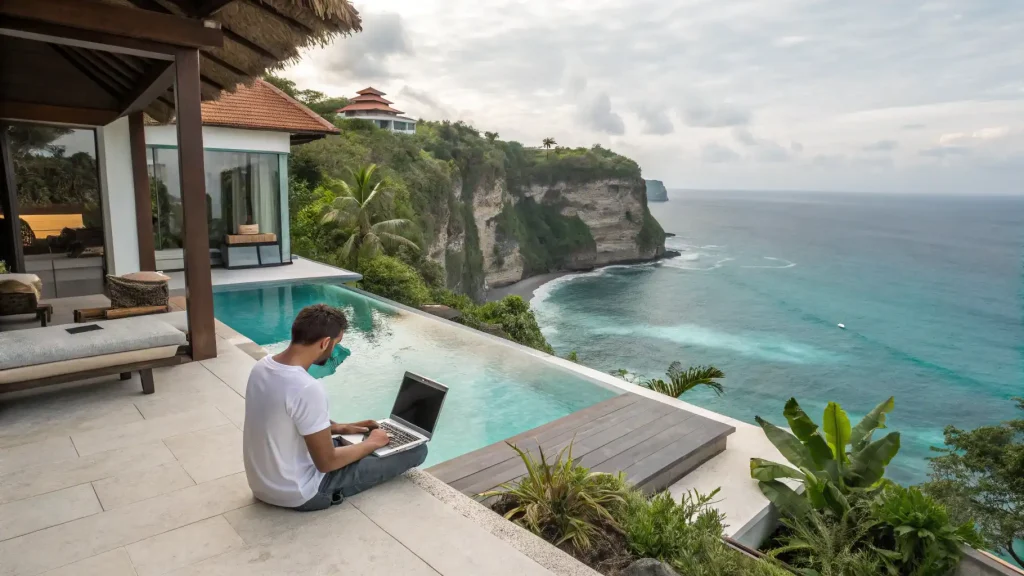
Yes, you can absolutely work remotely from Bali for a UK company, provided your visa status permits it and you are not engaged in local employment within Indonesia. The key distinction Indonesian immigration authorities make is between working for an Indonesian entity and working for an overseas company, receiving your salary directly from your UK employer. This setup is generally permissible under specific non-working visas, such as the B211A Visit Visa, which allows for a stay of up to 60 days, extendable twice for a total of 180 days. It is crucial that your work does not generate income from Indonesian sources or local clients; your income stream must originate entirely from outside Indonesia. Many UK professionals successfully manage their roles from Bali, maintaining their UK employment contracts and tax residency where applicable, ensuring their remote work from Bali on UK job roles remain compliant.
Managing the time difference between Bali and the UK requires strategic planning. Bali operates on Central Indonesian Time (WITA), which is GMT+8. This translates to a 7-hour difference during Greenwich Mean Time (GMT) and an 8-hour difference when the UK observes British Summer Time (BST). For example, 9 AM in London is 4 PM in Bali during GMT, or 5 PM in Bali during BST. This often means UK digital nomads schedule their deep work sessions in Bali’s mornings or late afternoons, aligning with late afternoon or early morning meetings in the UK. Tools like Slack and Zoom facilitate asynchronous communication and scheduled calls, ensuring project continuity. Many find the balance achievable, leveraging Bali’s vibrant mornings for personal pursuits before connecting with UK colleagues in their late afternoon. Ensuring clear communication with your UK employer about your remote location and work schedule is paramount for a smooth transition and sustained productivity.
What visa do I need as a digital nomad in Bali?
To legally stay and work remotely for a foreign company in Bali, the most common and practical visa for UK digital nomads currently is the B211A Visit Visa. This visa, officially a single-entry tourist or social-cultural visa, allows for an initial stay of 60 days. Crucially, it can be extended twice, each extension granting an additional 60 days, summing up to a maximum stay of 180 days (approximately six months). Applying for the B211A typically involves a visa agent in Indonesia, simplifying the process and interaction with Indonesian immigration. The cost for a B211A visa application through an agent usually ranges from $150 to $250 USD (2,300,000 to 3,800,000 IDR) for the initial 60 days, with extensions costing approximately $100-$150 USD (1,500,000 to 2,300,000 IDR) each. An alternative for shorter stays is the Electronic Visa on Arrival (e-VOA), obtainable online before arrival, which grants a 30-day stay and is extendable once for another 30 days, totaling 60 days. The e-VOA costs approximately $35 USD (500,000 IDR). These are the primary bali remote worker visa options.
While Indonesia has frequently discussed a dedicated ‘digital nomad visa’ or ‘second home visa’ that would allow longer stays and potential tax benefits, these options are not yet widely or easily accessible for general remote workers from the UK. The ‘second home visa’ (D212), for instance, requires a significant deposit of 2 billion IDR (approximately $130,000 USD) or proof of equivalent assets, making it inaccessible for most. Therefore, staying legal as digital nomad in Indonesia for the average remote worker means meticulously managing your B211A extensions or planning visa runs. Always confirm the latest regulations directly with the Indonesian Immigration Directorate General or consult a reputable visa agent, as policies can change. Overstaying your visa incurs a penalty of 1,000,000 IDR (approximately $65 USD) per day, underscoring the importance of adherence to immigration laws. For more detailed information, consult our comprehensive Bali visa guide.
Is Bali good for remote working?
Bali is exceptionally well-suited for remote working, attracting a diverse community of digital nomads from across the globe, including a significant contingent from the UK. The island offers an appealing blend of professional infrastructure and a relaxed, inspiring lifestyle. Key advantages include a generally lower cost of living compared to major UK cities, access to a vibrant international community, and a rich cultural environment. For instance, a comfortable one-bedroom villa with a private pool in areas like Canggu or Ubud can be rented for $800-$1,500 USD (12,000,000-23,000,000 IDR) per month, while a similar property in the UK would command upwards of £1,500-£2,500 (approximately $1,900-$3,200 USD). Daily meals at local warungs average $2-$5 USD (30,000-75,000 IDR), contrasting sharply with typical UK restaurant prices of £10-£20 ($13-$25 USD) per meal. This contributes to a lower digital nomad cost of living Bali.
Beyond economics, Bali fosters an environment conducive to productivity and well-being. The island’s focus on health, yoga, and outdoor activities provides a refreshing balance to work demands. While traffic in popular areas like Canggu and Seminyak can be dense, particularly during peak hours (8-10 AM and 4-7 PM), efficient scooter travel or ride-hailing apps like Gojek and Grab mitigate commuting challenges. Occasional power outages can occur, especially during heavy rain, but most reputable accommodations and coworking spaces are equipped with backup generators, ensuring minimal disruption to online work. The supportive digital nomad community facilitates networking, skill-sharing, and social connections, making it easier for newcomers to adapt and thrive. This holistic environment, where professional ambition meets a laid-back tropical rhythm, makes Bali a compelling choice for UK remote workers seeking a lifestyle upgrade. For further details on expenses, refer to our detailed cost of living breakdowns.
How fast is the internet in Bali for online work?
The internet speed in Bali, particularly in popular digital nomad hubs like Canggu and Ubud, is remarkably fast and reliable for online work, often exceeding expectations for a tropical island. Fibre optic broadband is widely available through providers such as IndiHome, Biznet, and MyRepublic, offering download speeds that frequently range from 50 Mbps to 100 Mbps, and even up to 200 Mbps in some areas. These speeds are more than adequate for high-definition video conferencing, large file uploads and downloads, and seamless streaming, making it entirely feasible to manage demanding UK-based roles. Monthly fibre optic plans typically cost between $30-$60 USD (450,000-900,000 IDR), varying by provider and speed tier. This consistent internet speed in Canggu and Ubud is a critical factor for remote workers.
In addition to fixed-line internet, mobile data connectivity is robust across the island. Telkomsel and XL Axiata are the leading mobile network providers, offering excellent 4G LTE coverage throughout most populated areas and increasingly expanding 5G networks. A 30-day mobile data package with 30-50 GB of data costs approximately $10-$15 USD (150,000-230,000 IDR). Many digital nomads utilize mobile hotspots as a reliable backup or for working on the go, ensuring continuous connectivity even during rare power flickers. In more remote regions, internet speeds might dip, but in the main expatriate areas, the infrastructure is designed to support the demands of a global remote workforce. Regular speed tests often confirm speeds suitable for graphic design, software development, and intensive online collaboration. This consistent connectivity is a cornerstone of Bali’s appeal as a leading destination for digital nomads. The time difference Bali to UK for work becomes manageable with such robust infrastructure.