What cultural mistakes should British people avoid in Bali?
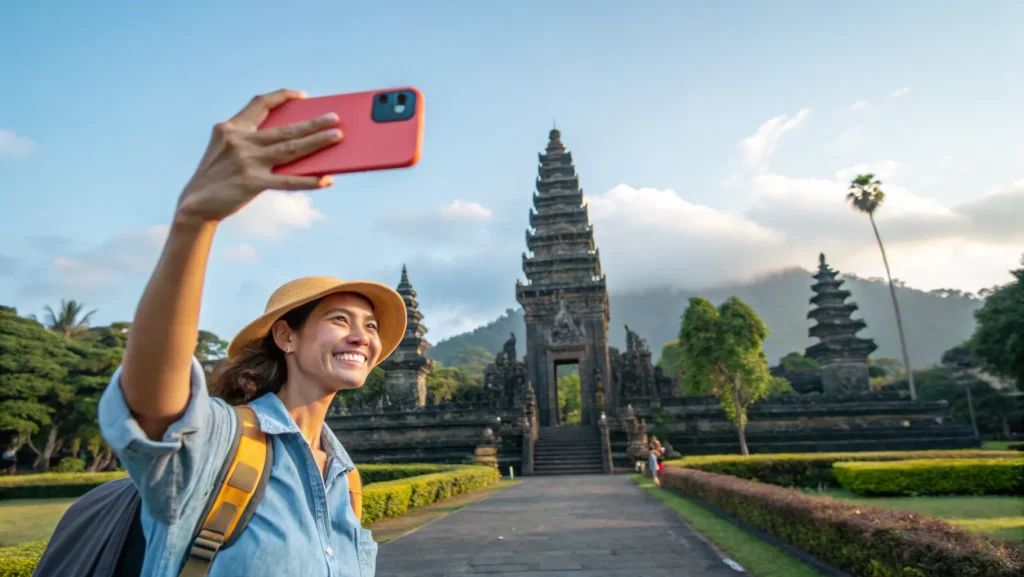
British people moving to Bali, or even visiting for extended periods, can easily avoid common cultural missteps by understanding core Balinese values of respect, harmony, and community. One significant faux pas is disrespecting offerings, known as *canang sari*, small woven palm-leaf baskets filled with flowers, rice, and incense, placed daily on sidewalks, shrines, and entrances. Stepping on these offerings, even accidentally, is considered highly disrespectful. Observe where they are placed, often near doorsteps or busy intersections, and consciously navigate around them. Balinese Hinduism permeates daily life; these offerings are not merely decorative but vital acts of devotion, made several times a day by nearly every household, reflecting a deep spiritual rhythm.
Public displays of affection, such as passionate kissing or excessive hugging, are generally frowned upon. While hand-holding is acceptable, overt intimacy in public spaces, particularly near temples or during ceremonies, can cause discomfort and is best reserved for private settings. Similarly, pointing with your feet, showing the soles of your feet towards someone, or stepping over people (especially elders) is considered impolite, as feet are seen as the lowest and least sacred part of the body. Conversely, the head is considered the most sacred, so touching someone’s head, even playfully, should be avoided. This reverence for the head extends to children; resist the urge to pat a child on the head.
Loud or boisterous behaviour, particularly in residential areas or during quiet hours, contradicts the Balinese preference for calm and gentle interaction. While nightlife in areas like Seminyak or Echo Beach in Canggu might be lively, maintaining a respectful volume in local warungs, shops, or residential streets is crucial. When interacting with locals, always try to maintain a calm demeanour, even when frustrated. Raising your voice or displaying overt anger is counterproductive and considered rude. Balinese communication often prioritises indirectness and maintaining ‘face’, so direct confrontation can be deeply unsettling. Furthermore, remember that drug offences carry severe penalties under Indonesian law, including lengthy prison sentences or even the death penalty. Bali Customs and Indonesian immigration maintain strict vigilance at Ngurah Rai International Airport (DPS) and other entry points regarding prohibited substances. Understanding these basic “do and don’ts in Bali culture” will significantly smooth your integration and enhance your experience as a British tourist or expat.
Do you need to tip in Bali?
Tipping in Bali is not strictly mandatory in the same way it might be in the UK or North America, but it is certainly appreciated and often expected for good service, especially from British tourists. Many establishments, particularly mid-range to high-end restaurants and hotels, automatically add a 5-10% service charge and a 10% government tax to your bill. If a service charge is already included, an additional tip is discretionary but still a kind gesture, particularly if the service was exceptional. For a meal where a service charge is included, rounding up the bill or leaving an extra IDR 10,000-20,000 (approximately USD 0.65-1.30) for your server is a thoughtful gesture.
For services where a service charge is not typically added, such as small local warungs, spas, or beauty salons, tipping is a direct way to acknowledge good service and supplement often modest wages. For a massage at a local spa, a tip of IDR 20,000-50,000 (USD 1.30-3.25) is appropriate depending on the treatment and duration. Hairdressers or nail technicians might expect a similar amount. Taxi drivers or private drivers who have provided good service, especially for longer journeys (e.g., a trip from Ngurah Rai DPS to Ubud, approximately 40 km, taking 1.5-2 hours, costing around IDR 300,000-400,000), would appreciate IDR 20,000-50,000 extra. For tour guides, a tip of IDR 50,000-100,000 (USD 3.25-6.50) per person per day is a standard guideline for excellent service.
It is always best to tip in Indonesian Rupiah (IDR) and in small denominations. While some places might accept foreign currency, it can be inconvenient for staff to exchange. Cash tips are generally preferred as they go directly to the service provider, unlike service charges which are often pooled and distributed by management. When considering “tipping in Bali guidelines,” remember that a genuine smile and a “terima kasih” (thank you) accompany any gratuity, reinforcing positive interactions and showing your appreciation for the local hospitality. For those considering moving to Bali from UK, understanding these nuances contributes significantly to positive local relations.
How should I dress when visiting temples in Bali?
When visiting temples in Bali, you should always dress modestly and respectfully, which primarily means wearing a sarong and a sash. This dress code applies to both men and women and is a non-negotiable aspect of showing reverence for these sacred sites. A sarong, known locally as a *kain*, is a piece of cloth wrapped around the lower body, extending from the waist to at least the ankles, covering your legs. The sash, or *selendang*, is a narrower strip of cloth tied around the waist over the sarong, symbolising respect and purity.
In addition to the sarong and sash, your shoulders should also be covered. This typically means wearing a shirt or blouse with sleeves; sleeveless tops, tank tops, or strapless garments are not appropriate. While not strictly required for men, a collared shirt is often preferred over a casual t-shirt to show further respect. It is also advisable to avoid overly revealing clothing in general when visiting any temple complex, even outside the immediate prayer areas. For women, this includes avoiding low-cut tops or very short shorts/skirts even before donning the sarong.
Most major temples, such as Tanah Lot, Ulun Danu Beratan, or Besakih Temple, have sarongs and sashes available for rent at their entrance, often for a small fee ranging from IDR 10,000-20,000 (approximately USD 0.65-1.30). Some may even provide them free with your entrance ticket. However, if you plan to visit multiple temples, purchasing your own sarong and sash from a local market (costing around IDR 50,000-150,000, or USD 3.25-10) is a practical and economical option. Having your own ensures you always have a clean, appropriate set ready. Remember to remove your shoes before entering the temple’s inner courtyards where prayers are conducted. This adherence to “how to dress in Bali temples” is a fundamental aspect of demonstrating respect for Balinese Hinduism and its deep spiritual significance.
Is it worth learning Indonesian to live in Bali?
Yes, learning Indonesian (Bahasa Indonesia) is undoubtedly worth the effort if you plan to live in Bali, significantly enhancing your experience and facilitating deeper integration into the local community. While English is widely spoken in tourist hubs like Seminyak, Canggu, and Ubud, particularly in hotels, restaurants, and expat-focused businesses, daily life outside these bubbles often operates primarily in Bahasa Indonesia or Bahasa Bali. Knowing even basic phrases allows you to communicate directly with local vendors, drivers, staff, and neighbours, fostering stronger relationships and often leading to more authentic experiences and better pricing.
Bahasa Indonesia is a relatively phonetic and grammatically straightforward language, making it accessible for learners. Unlike many Asian languages, it has no complex verb conjugations, tenses are indicated by context or adverbs, and pronunciation is generally consistent. Learning common greetings like “Selamat pagi” (good morning), “Terima kasih” (thank you), “Permisi” (excuse me), and “Berapa harganya?” (how much is it?) will immediately open doors. For expats, this not only simplifies daily transactions but also demonstrates a genuine effort to connect with the local culture, which is highly appreciated. This is a key aspect of “integrating into Balinese community.”
Investing in language lessons is a tangible step. Group classes can range from IDR 1,500,000-3,000,000 (USD 100-200) for a short course (e.g., 20 hours over 2-4 weeks), while private tutors typically charge IDR 150,000-300,000 (USD 10-20) per hour. Reputable language schools are available in major expat areas. While Bahasa Indonesia is the national language, Bali also has its own distinct local language, Bahasa Bali. For long-term residents, picking up a few Balinese greetings or phrases is also a sign of deep respect, though it is more complex with different registers for social hierarchy. For anyone considering “moving to Bali from UK,” embracing “learning Bahasa Indonesia basics” transitions your stay from a prolonged holiday to a true residency.