Is Canggu good for expats from the UK?
Canggu is exceptionally well-suited for expats from the UK, providing a robust infrastructure, a large English-speaking community, and a lifestyle that balances tropical relaxation with modern conveniences. The transition for British individuals and families is often smoother here than in many other Southeast Asian destinations, largely due to the established expat network and the accessibility of information and services. Many British expats find the work-life balance in Canggu particularly appealing, especially those working remotely or as digital nomads. The time difference to the UK is typically seven or eight hours, depending on British Summer Time, which allows for some overlap in working hours without extreme shifts. For “living in canggu as an expat”, the community integration is high; social groups form around shared interests such as surfing, yoga, or entrepreneurship. Visa processes, such as the B211A e-VOA for initial stays or the KITAS for longer residency, are navigable with local assistance, a service our team at Moving to Bali from UK can streamline. Access to international schools like Canggu Community School (CCS) or Green School caters to families, offering British curriculum options and fostering a multicultural environment for children. Healthcare facilities include numerous clinics and hospitals like Siloam Hospital Denpasar, approximately 45 minutes by car from Canggu, providing reliable medical care. The culinary scene, with its fusion of local Indonesian flavours and international cuisine, offers familiar comforts and exciting new tastes, often at more accessible price points than in the UK. This blend makes Canggu a compelling choice for “canggu for digital nomads from uk”, providing both professional opportunities and a vibrant social life.
How expensive is it to live in Canggu?
The cost of living in Canggu is generally more affordable than in major UK cities, though it varies significantly based on lifestyle choices and accommodation standards. For “canggu cost of living for uk expats”, a comfortable monthly budget typically ranges from 18,000,000 IDR (approx. 1,150 USD) for a modest lifestyle to 35,000,000 IDR (approx. 2,250 USD) for a more luxurious experience. Accommodation is often the largest expense. A one-bedroom villa with a private pool can rent for 10,000,000 to 25,000,000 IDR (approx. 650 to 1,600 USD) per month, depending on location and amenities. Long-term leases (6-12 months) often secure better rates. For comparison, a modern one-bedroom flat in central London might cost upwards of 1,800 GBP (approx. 34,000,000 IDR) per month. Groceries from local markets are significantly cheaper than supermarkets, with a weekly spend of 500,000 IDR (approx. 32 USD) for fresh produce and basic staples being common. Eating out at local warungs costs around 30,000-50,000 IDR (approx. 2-3 USD) per meal, while Western-style cafes and restaurants average 80,000-150,000 IDR (approx. 5-10 USD) per meal. Transport, predominantly by scooter, costs around 700,000 IDR (approx. 45 USD) per month for rental and fuel. Ride-hailing apps like Gojek or Grab offer car and scooter services, with a 5 km ride averaging 25,000-50,000 IDR (approx. 1.60-3.20 USD). Utilities, including electricity, water, and internet (fiber optic often available), can sum to 1,000,000-2,000,000 IDR (approx. 65-130 USD) monthly. Health insurance is a crucial consideration, with international plans starting from 1,500,000 IDR (approx. 95 USD) per month. Overall, a well-managed budget allows for a high quality of life at a fraction of UK costs. For detailed planning, consider our comprehensive guide to moving to Bali from UK.
Where should I live in Canggu long term?
Choosing where to live in Canggu long term depends heavily on individual preferences for vibrancy, tranquility, and proximity to specific amenities. The “best areas in canggu to live” each offer a distinct atmosphere.
Batu Bolong: This is the historical epicentre of Canggu, known for its lively main street, surf beach, and a high concentration of cafes, restaurants, and shops. It is ideal for those who thrive on constant activity and being at the heart of the social scene. Expect more traffic and noise, but convenience. Accommodation here ranges from budget guesthouses to upscale villas, often within walking distance of the beach.
Berawa: Situated slightly north of Batu Bolong, Berawa offers a balance between vibrant energy and residential calm. It boasts popular beach clubs, family-friendly eateries, and international schools, making it a favourite for expats with children. The roads are generally wider, and traffic can be slightly less congested than Batu Bolong. Villas and modern apartments are common here, often with good access to sports facilities and supermarkets.
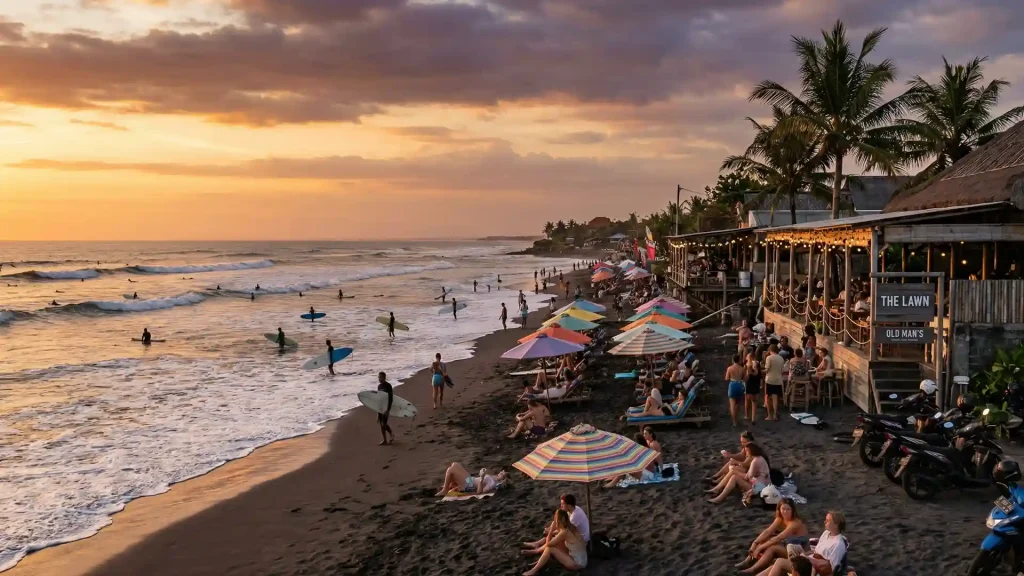
Echo Beach / Pererenan: Further north and west, these areas are notably quieter and more residential, appealing to those seeking a more relaxed, surf-centric lifestyle. Echo Beach is famed for its consistent waves and sunset views. Pererenan, just inland, retains a more traditional Balinese village feel, with rice paddies interspersed between villas. This area is perfect for individuals or couples who prefer peace and closer proximity to nature, while still being a 10-15 minute scooter ride from Canggu’s main hubs. Property here often features larger plots and more expansive views. This area is particularly popular for those focused on wellness and a slower pace. You’ll find more yoga studios and organic cafes here, fostering a sense of community for those prioritizing health and mindfulness.
Umalas: Located east of the main Canggu strip, Umalas offers a more suburban, established expat environment. It’s often chosen by families due to its larger properties and proximity to international schools without being directly in the tourist bustle. While not beachside, Umalas provides easy access to both Canggu and Seminyak, approximately 15 minutes to either, balancing convenience with a calmer residential setting. This area also sees a higher concentration of long-term rental villas, some with significant gardens and private amenities, catering to those seeking a stable family base.
Each area provides different aspects of the “canggu lifestyle”, from the bustling “canggu nightlife for expats” in Batu Bolong to the serene evenings in Pererenan. Consider a short-term rental in a few different areas before committing to a long-term lease to experience their unique atmospheres firsthand.
Is Canggu safe for solo female travellers from the UK?
Canggu is generally considered safe for solo female travellers from the UK, though standard precautions applicable to any international travel should always be observed. The expat community is large and supportive, and many solo women live and travel independently within the area. Petty crime, such as bag snatching by opportunistic individuals on scooters, can occur, particularly in busy areas or at night. It is advisable to keep valuables secure, avoid walking alone late at night on unlit streets, and always secure your scooter helmet and belongings. The local police force patrols the area, and community awareness contributes to overall safety. Respect for local customs and dress codes, particularly when visiting temples or rural areas, is also important for a harmonious experience. For rides, using reputable apps like Gojek or Grab provides tracking and driver identification, enhancing safety compared to unmetered taxis. Always inform someone of your whereabouts, especially if venturing to less populated areas. Most social venues are well-lit and populated, fostering a secure environment for enjoying “canggu nightlife for expats”. The strong sense of community among expats and locals alike often means help is readily available if needed. For official travel advice and safety guidelines, consulting the UK Foreign, Commonwealth & Development Office (FCDO) website before departure is recommended.